Carriers price your freight on two things: how much it weighs and how much space it takes up in the truck. Whichever is greater becomes your chargeable weight. All quotes are based on chargeable weight.
Table of Contents
1. Weight terms explained
You'll find these at the bottom right of the Items section in the Goods tab.
Total actual / dead weight
What your packaged freight weighs on a scale.
How it's calculated: Qty × Weight (kg) for every line in the Items section, added together.
Total volumetric weight
A weight based on the size of your freight. Bulky items take up truck space even when they're light, so carriers convert volume into weight at 250 kg per cubic metre.
| In metres | L × W × H × 250 |
| In centimetres | L × W × H ÷ 4,000 |
Total chargeable weight
Your freight is calculated based on the greater of deadweight and volumetric weight.
How it's calculated: maximum of deadweight or volumetric weight, in kilos
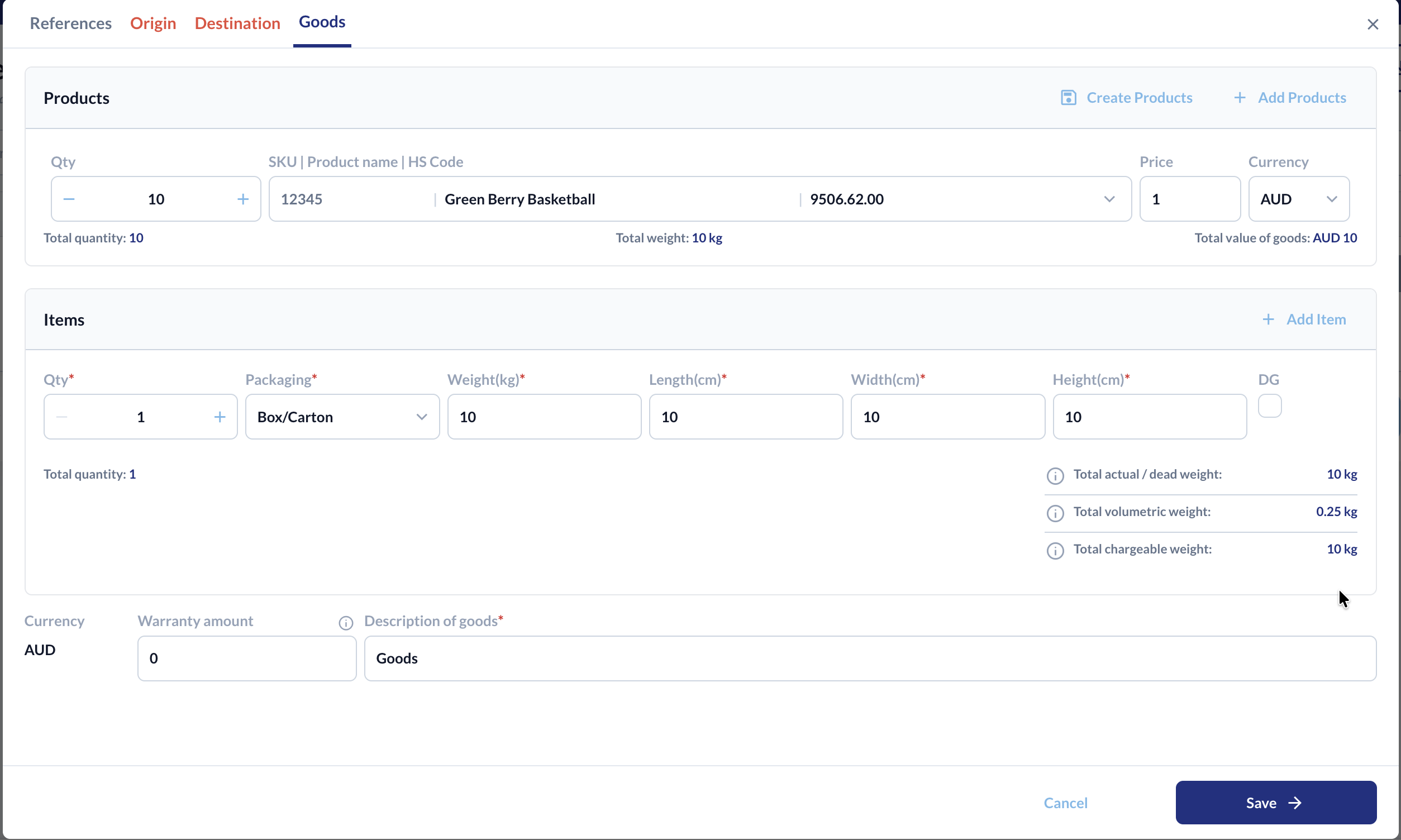
2. Example 1 — small, heavy carton
One compact 10 kg carton. It's heavy for its size, so dead weight sets the price.
3. Example 2 — large, light carton
Ten basketballs packed into one large carton. It only weighs 10 kg, but takes up a lot of space — so volumetric weight sets the price.
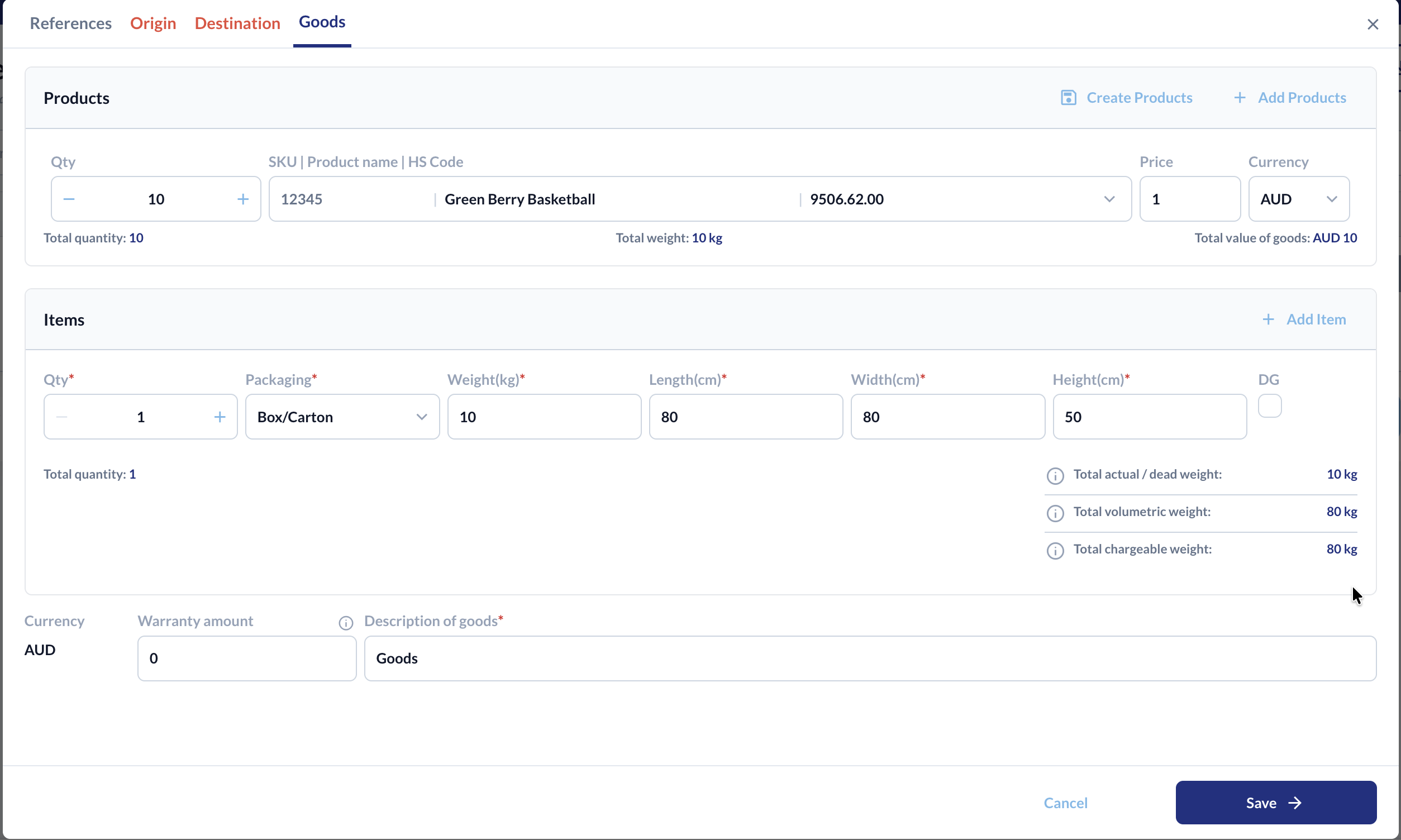
- Products section: 10 × Green Berry Basketballs (10 kg total)
- Items section: 1 × Box/Carton, 80 × 80 × 50 cm, 10 kg
Why? The carton weighs 10 kg on a scale, but its size (0.32 m³) takes up the same truck space as an 80 kg item.
Was this article helpful?
That’s Great!
Thank you for your feedback
Sorry! We couldn't be helpful
Thank you for your feedback
Feedback sent
We appreciate your effort and will try to fix the article